


Ski Arlberg - Ski Area Guide
Stats
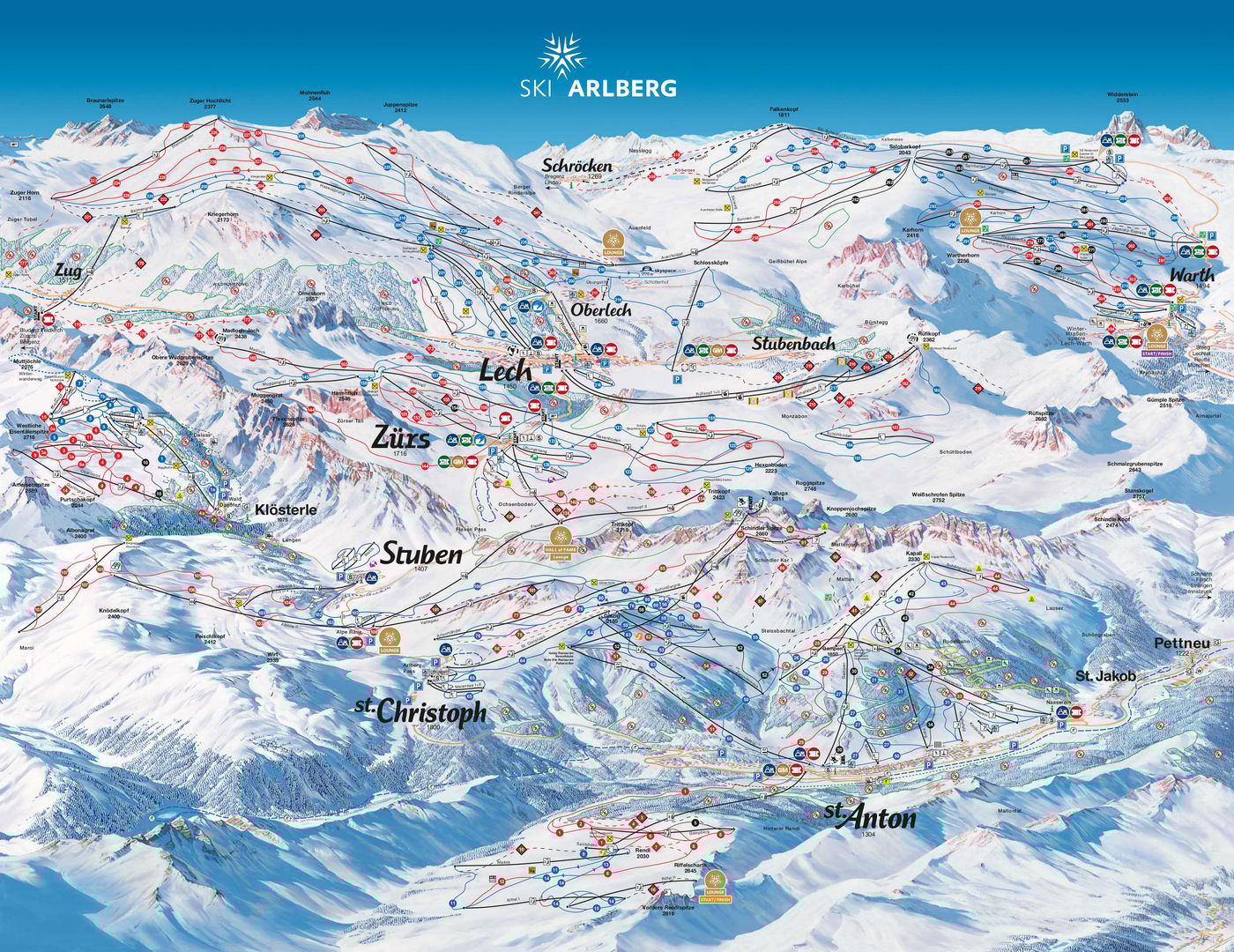
Ski Arlberg Piste Map
Resorts in Ski Arlberg
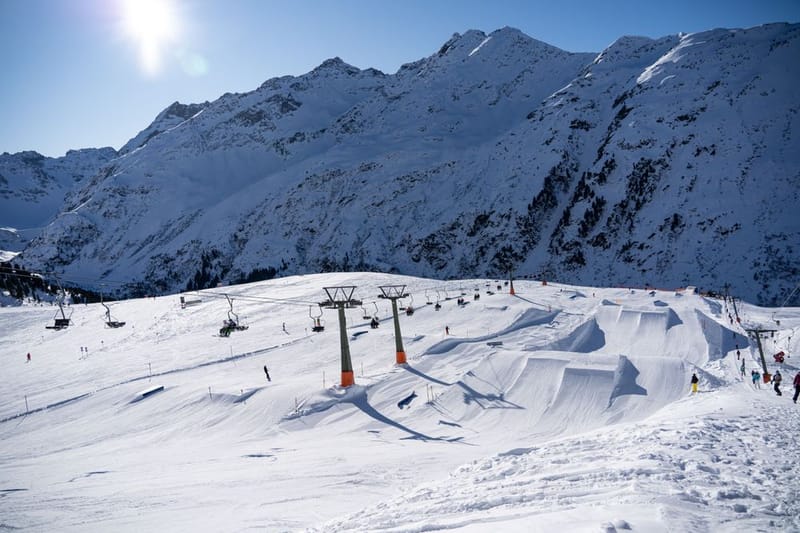
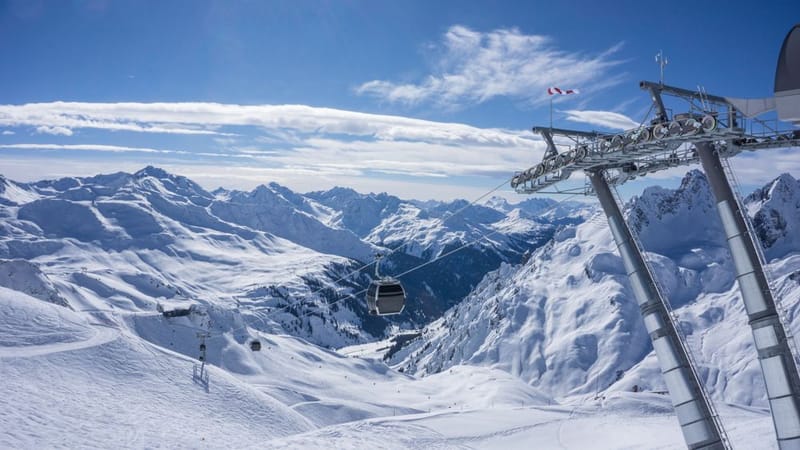
Ski Arlberg Overview
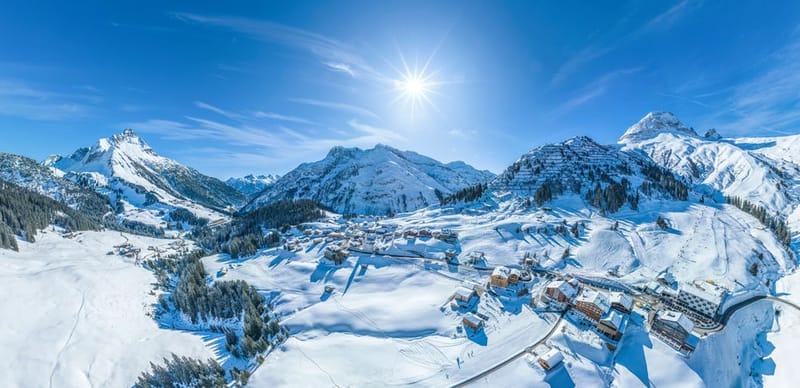
Straddling the border between Tyrol and Vorarlberg in western Austria, Ski Arlberg is one of the Alps' most extensive and legendary ski areas. The region connects five distinct resorts—St. Anton am Arlberg, Lech Zürs am Arlberg, Warth-Schröcken, and Stuben am Arlberg—into a single, seamlessly linked playground spanning 300km of piste, 191 runs, and served by 85 lifts.
What sets this area apart is the sheer variety on offer. From the powder-packed slopes of Warth-Schröcken (the snowiest resort in the Alps) to the legendary off-piste terrain around St. Anton, and the perfectly groomed cruisers of Lech Zürs, there's an embarrassment of riches here. The lift infrastructure is world-class—think heated chairlifts with weather shields—and the area's snow record speaks for itself.
The resorts connect via an efficient network of lifts and pistes. St. Anton links to Stuben and onwards to St. Christoph, whilst a gondola connection joins Lech Zürs with Warth-Schröcken. The famous Run of Fame (also known as the White Ring) ties it all together, offering a 22km circuit that showcases the best of the Arlberg. Free ski buses fill any gaps, making it straightforward to base yourself in one village and explore the lot.
This is intermediate and advanced skier territory first and foremost. Our reviewers mention that beginners might find the terrain challenging—there's a noticeable jump between nursery slopes and blue runs in places. Strong intermediates will absolutely thrive here, with endless reds to carve up. For experts and freeriders, it's genuinely world-class, with marked itineraries, steep blacks, and some of the Alps' most accessible lift-served off-piste. Groups with mixed abilities can make it work, but everyone needs to be comfortable on reds to really enjoy the linking routes between resorts.
Families are well catered for in Lech and Warth, which offer quieter, more relaxed vibes. St. Anton, on the other hand, pulls in groups looking for legendary après—it's the birthplace of the scene, after all. One Snomad community member who's an advanced snowboarder summed it up perfectly: "Fantastic skiing and amazing après. There really are endless ski opportunities."
The Skiing in Ski Arlberg
Ski Arlberg offers a massive 300km of piste spread across five distinct villages — St. Anton, Lech, Zürs, Stuben, and Warth-Schröcken — making it Austria's largest ski area and one of the most varied in the Alps. The terrain suits confident intermediates and advanced skiers best, though there's enough cruising for improvers who don't mind a challenge.
The piste network delivers everything from rolling blues to steep blacks, with 68 intermediate runs, 51 advanced runs, and 72 expert-rated descents. What makes the area special is the sheer diversity: wide-open bowls above Zürs, tree-lined runs around Lech, and the famous steep terrain at St. Anton. One Snomad community member who's an expert skier described it as having "unmatched" variety, whilst another advanced rider mentioned the "endless skiing opportunities" across the connected resorts.
Standout Areas
St. Anton is the beating heart for advanced skiers, with challenging reds and blacks that turn into proper mogul fields by afternoon. The Rendl area offers quieter powder runs when conditions allow. Our reviewers mention the epic run from the highest point down to St. Christoph as a highlight, though the home run into St. Anton gets chaotic and heavily mogulled later in the day.
Lech and Zürs provide a more relaxed vibe with beautifully groomed, confidence-building blues and reds. A user who is an advanced snowboarder said the runs here are "lovely and wide with great space to move." The terrain between the two villages is particularly scenic, and the Madloch area opens up superb ski routes when snow conditions permit.
Warth-Schröcken sits at the northwestern edge and holds Europe's best snow record. It's quieter here, with excellent intermediate terrain and some brilliant off-piste zones for those venturing beyond the markers. The majority of users think it's worth the journey for fresh tracks, especially when the rest of the area gets tracked out.
Stuben is tiny but perfectly placed for exploring. The rolling pistes feel like a roller coaster according to one advanced skier, and there are virtually no queues.
Getting Around
The lift system is genuinely impressive — 85 modern lifts including heated chairlifts with covers. Some of the user reviews reference how efficient everything is, with one intermediate skier noting "minimal queuing times" and smooth connections throughout. The free ski buses fill gaps where lifts don't reach, though they can get rammed at peak times.
That said, covering the whole area properly needs more than a week. The connection between St. Anton and Lech works smoothly, but reaching Warth still involves a slightly slow two-person chairlift that can bottleneck. Most riders don't mind given what's waiting on the other side.
Snow Reliability
Ski Arlberg's altitude isn't massive by Alpine standards, but consistent snowfall keeps conditions strong throughout the season. Warth averages the most natural snow in Austria, whilst the main slopes benefit from extensive snowmaking. Our reviewers mention well-maintained pistes even during lean snow years, though lower runs back to St. Anton and Lech can get slushy and icy in warmer spells, particularly late season.
The Resorts in Ski Arlberg
The Arlberg ski area brings together four distinct base villages, each with its own character and appeal. What makes this setup brilliant is how they work together—you can chase powder in Warth, lap reds in Lech, then finish with legendary après in St. Anton, all on one lift pass.
St. Anton am Arlberg is the beating heart of the region and where most visitors base themselves. It's loud, proud, and unapologetically geared towards skiers and boarders who like to go hard both on and off the slopes. "Everyone should go here at least once in their life—even if it is just for the après ski," says William, an advanced skier from the UK. The famous Mooserwirt and Krazy Kangaroo get rammed from 3pm onwards, with euro-dance pumping and Jäger flowing. The skiing here skews intermediate to advanced—steep, challenging terrain that'll test your legs by afternoon. One user who is an advanced snowboarder said the slopes are "more technically challenging than French ski resorts." It's not ideal for complete beginners, but if you can handle reds confidently, you'll love it here.
Lech Zürs am Arlberg sits at the opposite end of the spectrum. This is the posh side of the mountain—think designer boutiques, Michelin-starred restaurants, and hotels that cost more per night than some people's season passes. But the skiing absolutely backs up the price tag. The slopes here are immaculately groomed, wide, and perfect for cruising. "Beautiful woodland scenery and lovely town," notes Aimee, a beginner skier from the UK, though she adds the slopes are "more difficult overall for a beginner compared to 3 Valleys." Advanced skiers rave about the off-piste opportunities, particularly around Trittkopf and Madloch. The après is far more refined than St. Anton—think champagne in cosy mountain huts rather than shotgunning beers to EDM. It's brilliant for families, couples, and anyone who wants world-class skiing without the chaos.
Warth - Schröcken is the quiet gem tucked away in the northwest corner. It holds the record for the snowiest resort in Austria, which tells you everything you need to know about powder potential. "Quiet, no queues. Lovely scenery," says William, an advanced skier. The majority of users think Warth is perfect if you want to escape the crowds whilst still accessing the entire Arlberg. The local slopes are excellent for intermediates—rolling, flowing pistes that feel like a roller coaster. It links seamlessly to Lech via modern lifts, so you get the best of both worlds: peaceful mornings in Warth, then over to Lech or St. Anton when you fancy more variety. The village itself is tiny but charming, with a handful of excellent hotels and a couple of lively umbrella bars for après.
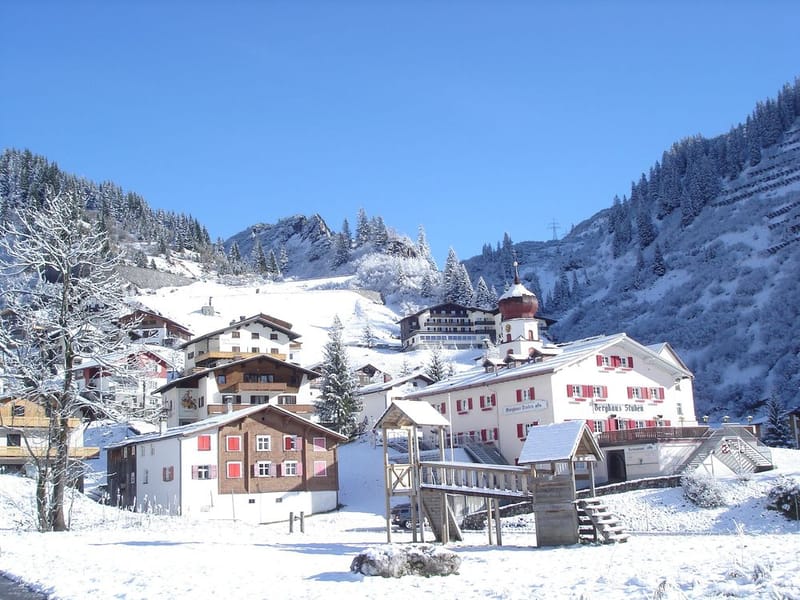
Stuben am Arlberg is the smallest and most traditional of the lot. It's a proper old-school Austrian village—just one gondola out of town, a few guesthouses, and locals who actually live there year-round. "Little village, some lovely après ski bars. Quiet town but has good ski hire too," says Kathy, an intermediate skier. It's brilliantly positioned for accessing St. Anton and Lech, essentially acting as the middleman. The gondola whisks you straight into the heart of the ski area, and you're only a short ride from both the steep runs of St. Anton and the cruisy blues of Lech. It's ideal if you want a peaceful base with early nights, but easy access to the entire circus.
Together, these four resorts create one of the most complete ski areas in the Alps. You can stay in quiet Warth and commute to the party, base yourself in Lech luxury whilst exploring St. Anton's steeps, or plant yourself in St. Anton and tour the entire region. The infrastructure connecting them all is superb—fast, modern lifts with heated seats and bubble covers.
Practical Info for Ski Arlberg
Lift Pass
Ski Arlberg operates on a unified lift pass that covers all five resorts - St. Anton, Lech, Zürs, Stuben, and Warth-Schröcken. You'll get access to 85 lifts and 300km of pistes spread across the entire area, which makes it one of the best-value passes in the Alps when you consider the sheer amount of terrain on offer.
A six-day pass costs around €450, whilst a season pass will set you back €1,223. The pass also includes the connecting lifts between villages, so you can easily hop between resorts without restriction. Our reviewers mention that the investment pays off quickly if you're planning to explore the whole area rather than sticking to one base.
Best Time to Visit
December through to April is your sweet spot, with January and February typically delivering the deepest snowpack. The altitude here works in your favour - you're looking at proper snow coverage throughout the season.
One Snomad community member liked visiting in late January when fresh snow was frequent and lift queues were manageable after the New Year crowds dispersed. March brings longer days and often excellent spring conditions, though you'll want to get your runs in before the afternoon sun softens everything up too much.
If you're after fewer crowds and don't mind slightly variable conditions, early December or late April can be brilliant - just check the snow reports before booking.
Getting There
Nearest Airports:
- Innsbruck (100km) - around 1.5 hours by car
- Zürich (195km) - roughly 2.5 hours
- Friedrichshafen (130km) - about 2 hours
- Munich (280km) - approximately 3 hours
Innsbruck is your closest bet and makes for the quickest transfer, though Zürich often has better flight connections from the UK. Regular shuttle buses run from all major airports, or you can hire a car if you fancy the flexibility. The majority of users think the Innsbruck route offers the best balance between transfer time and flight availability.
St. Anton has its own train station with direct connections to Zürich and Innsbruck, which makes it dead easy if you're travelling without a car. From there, you can catch local buses to reach the other villages in the ski area.