


Tignes-Val d'Isère - Ski Area Guide
Stats
Tignes-Val d'Isère Piste Map
Resorts in Tignes-Val d'Isère
Tignes-Val d'Isère Overview
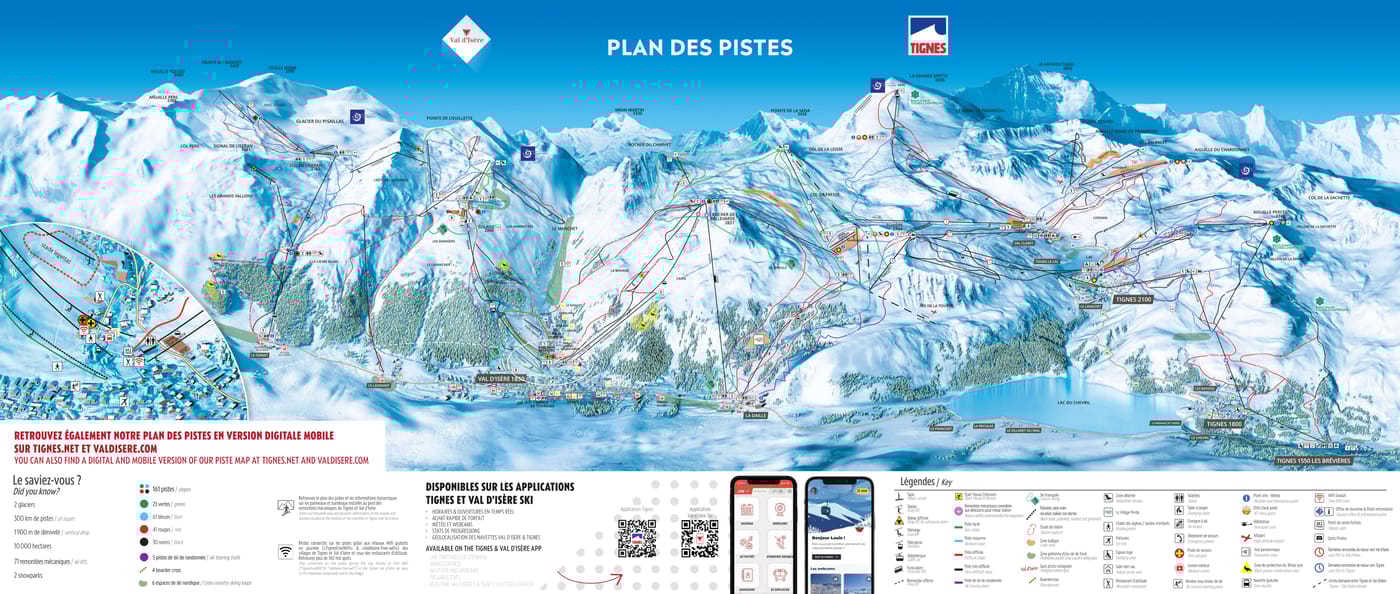
Perched high in the Tarentaise Valley in the French Alps, the Tignes-Val d'Isère ski area - marketed as Espace Killy - delivers one of Europe's most comprehensive mountain experiences. This colossal playground spans 300km of piste across 163 marked runs, all serviced by 84 lifts that whisk you between glaciers, bowls and wide-open slopes.
The two resorts are properly linked, not just on paper. You can ski back and forth throughout the day without faff, though the connection points do see queues during peak season. Val d'Isère sits lower down the valley with its traditional Alpine charm and classic stone buildings, whilst Tignes sprawls across several purpose-built villages at altitude - Val Claret, Le Lac, Les Boisses and Les Brevieres. What Tignes lacks in chocolate-box looks, it makes up for with snow reliability and convenience.
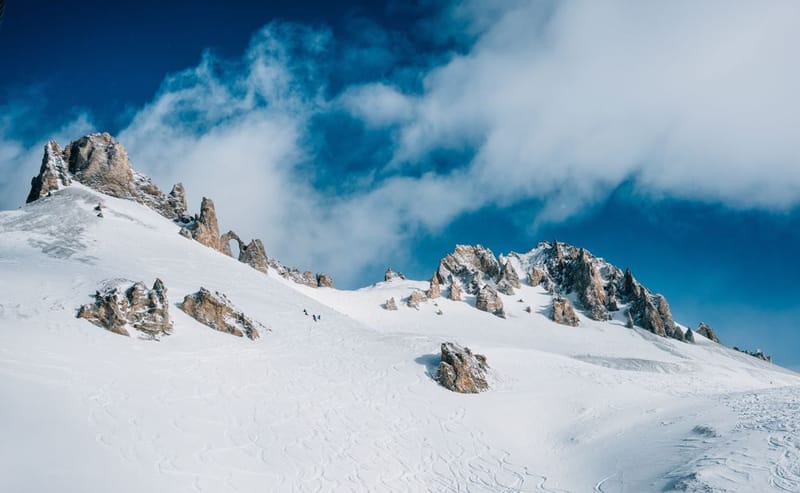
The high altitude is the area's trump card. With terrain reaching up to the Grand Motte glacier at 3,456m and resort level starting around 2,100m, you're practically guaranteed proper coverage from December through to May. One Snomad user who's an advanced skier noted they've "been coming here for years" because it's "one of the most snow sure resorts in the world."
This is genuinely a ski area for everyone, though beginners should be aware that some green runs require navigating blues first, and the routes back to Val d'Isère village are red or black - meaning gondola downloads become part of the routine. Intermediates will absolutely thrive here. The sheer volume of cruisy blues and reds means you can clock serious mileage without repeating runs. A user who is an intermediate skier reckoned you could "ski 60km+ a day very easily" thanks to the efficient lift system.
Expert skiers and riders get access to legendary terrain. The Face de Bellevarde Olympic downhill is properly intimidating, whilst off-piste options are extensive when conditions allow. Our reviewers mention that whilst tracked-out powder can be an issue due to the high volume of capable skiers, there's enough terrain to find fresh lines if you know where to look or hire a guide.
The Skiing in Tignes-Val d'Isère
The Espace Killy ski area sprawls across 300km of piste, connecting Tignes and Val d'Isère into one massive high-altitude playground. With terrain ranging from wide, forgiving cruisers to seriously challenging blacks and endless off-piste, there's enough here to keep you busy for weeks.
The altitude is the headline act. Most skiing sits between 1,800m and 3,456m, with the Grande Motte glacier topping things off. This height means the snow sticks around reliably from early December through to May, and according to our users, conditions hold up impressively even late in the season. One reviewer who skied in April noted "all runs were kept open back to the village" despite it being the tail end of the season.
Getting Around
The lift network is modern and efficient, with 84 lifts linking the various sectors. Snomad users consistently mention how easy it is to navigate between areas — you're rarely stuck traversing or waiting ages for connections. The funicular and underground train to the Grande Motte glacier are particularly slick. An advanced snowboarder in our community highlighted that it's "easy to get around the whole resort on a snowboard without any flats," which is high praise given how some French resorts treat boarders.
Val d'Isère Side
Val d'Isère delivers classic Alpine terrain with a good mix of tree-lined runs lower down and open bowls higher up. The Face de Bellevarde — home to the Olympic downhill — is the iconic challenge here, though several reviewers mentioned it gets chopped up by the end of the day. The Solaise and Bellevarde sectors offer solid reds and blues for intermediates looking to progress, while La Daille provides quick access via funicular. One expert skier praised the "long well groomed green, blue and red pistes as well as challenging black runs such as La Sache."
Tignes Side
Tignes is more about wide-open, above-treeline skiing. The Grande Motte glacier is a must for powder hounds and park riders, while the Aiguille Percée and Tovière areas serve up kilometre after kilometre of varied terrain. The runs here tend to feel less congested than Val d'Isère, especially if you base yourself in Tignes 1800. A user who stayed there mentioned it was "so much quieter" and gave "super quick" access to the Aiguille Percée lift area.
Piste Quality
Grooming across both resorts gets consistently high marks. Multiple users reference well-maintained pistes and excellent preparation. An intermediate skier noted "the quality of the piste grooming was excellent" even after heavy snowfall. That said, runs back into Val d'Isère town can get scraped and mogul-heavy by late afternoon, particularly after lunch. Beginners should note that the official run gradings can be a bit cheeky — the greens and blues down to Val d'Isère village are properly challenging, and several users recommend taking the gondola down instead if you're still finding your feet.
Off-Piste and Advanced Terrain
If you're into off-piste, bring a guide. The lift-accessed terrain is vast, with powder stashes easy to find when conditions align. An expert skier described "kilometres of lift accessible off-piste," while another mentioned the glacier and Olympic runs as absolute highlights. The downside? With so many advanced riders about, fresh tracks don't hang around for long.
For Beginners and Intermediates
Beginners have decent green runs higher up where snow quality stays consistent, but getting down to resort level can be tricky. The majority of our users think this is better suited to confident intermediates and above. That said, ski schools get rave reviews — one beginner mentioned progressing "a lot in one week" thanks to a "very professional and friendly" instructor.
Intermediates are genuinely spoilt. Wide blues and reds dominate, giving you space to carve and build confidence. Several reviewers mentioned how the terrain helped them step up to harder runs. The variety means you can ski for days without repeating the same route, though an intermediate snowboarder did note that after a while, some of the wide-open pistes can "start to feel a bit similar" if you're craving more technical, tree-lined runs.
The Resorts in Tignes-Val d'Isère
The Espace Killy ski area comprises two distinct resorts that share 300km of pistes but offer notably different experiences.
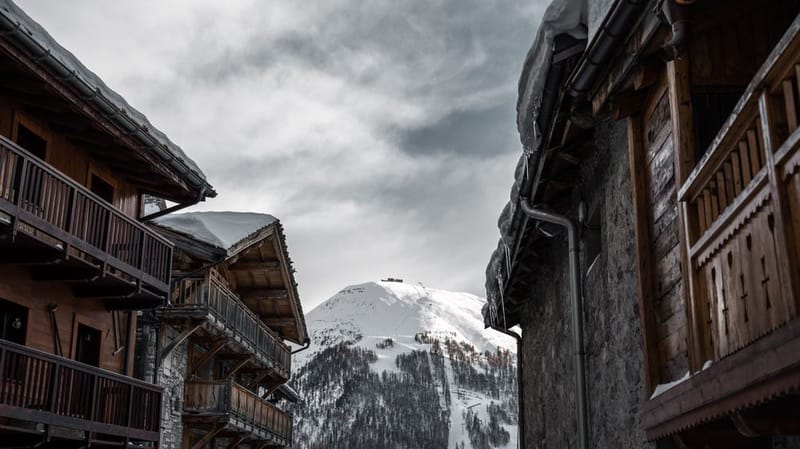
Val d'Isère is the more polished of the pair - a traditional alpine village with stone and wood architecture, upscale restaurants, and a lively après scene. Joseph, an intermediate skier, reckons it has "great bars and restaurants" with "all the locals super friendly". The resort sits lower in the valley and attracts a slightly older, more moneyed crowd. Advanced skiers rate it highly - one Snomad user mentioned the "legendary off-piste" and the "Face de Bellevarde used in the 1992 Olympic downhill" as particularly thrilling. The main runs back to the village are red or black, so beginners will need to use the gondola down. One reviewer notes it's "not as posh" as you might expect, describing it as having "more of a skier vibe than influencer" with a "relaxed and fun, not pretentious" atmosphere.
Tignes is more functional and purpose-built, spread across several distinct villages at different altitudes (Val Claret, Le Lac, Les Boisses, and Les Brévières). Our users mention it's "more chilled than Val d'Isère" and slightly cheaper overall. The resort sits higher - crucial for snow reliability - and has a more unpretentious feel. Amy, a beginner skier, called Tignes her "all time favourite resort" for the "gorgeous apartments" and reasonable prices compared to other resorts. The skiing here tends to be wider and more open, which several intermediate riders appreciated for cruising, though some noted the runs can "feel a bit similar" after a few days without the variety of tree-lined terrain. Tignes attracts younger groups and families looking for value and guaranteed snow.
Together, they're brilliant for mixed-ability groups. The lift system connects them seamlessly, so you can base yourself in budget-friendly Tignes and still access Val d'Isère's superior dining and nightlife. A user who visited with friends of varying abilities noted there were "runs available for everyone, always quiet lifts and easy to access bars and restaurants on the slopes". The combination gives you the best of both worlds - Tignes for reliable, high-altitude skiing and Val d'Isère when you fancy something a bit smarter.
Practical Info for Tignes-Val d'Isère
Lift Passes
The Tignes-Val d'Isère area operates on a single lift pass covering both resorts and all 84 lifts across 300km of pistes. You'll get access to everything from the glaciers above Tignes to Val d'Isère's back bowls without needing to faff about with different tickets. A 6-day pass costs around €450, whilst a full season pass runs to €1,125. Given the sheer amount of terrain on offer, that's pretty solid value - you could ski here for weeks and still find fresh lines.
Best Time to Visit
Tignes' glacier means you can ski here from late November through to early May, one of Europe's longest seasons. The sweet spot is typically January through March when you've got the best snow coverage and all lifts running. December can be brilliant if you want quieter slopes, though some higher altitude lifts might not be spinning yet. April skiing is often underrated here - the snow usually holds well, particularly up high, and you'll get longer days with more sun.
Getting There
Geneva is your closest major airport at around 180km away, with transfer times roughly 2.5-3 hours depending on conditions. Lyon is slightly further at 210km (about 3 hours), whilst Chambéry is closer at 130km but has fewer flight options. Grenoble airport sits at 180km and can work out cheaper, particularly with budget airlines.
Most people either book a transfer service or hire a car. If you're driving yourself, you'll need winter tyres or chains - the approach roads can get properly gnarly in bad weather. There's also the option of flying to Geneva and catching the train to Bourg-St-Maurice, then a bus up to resort, though this adds time and isn't always the most straightforward with all your kit.